
Updated: 13 October 2026
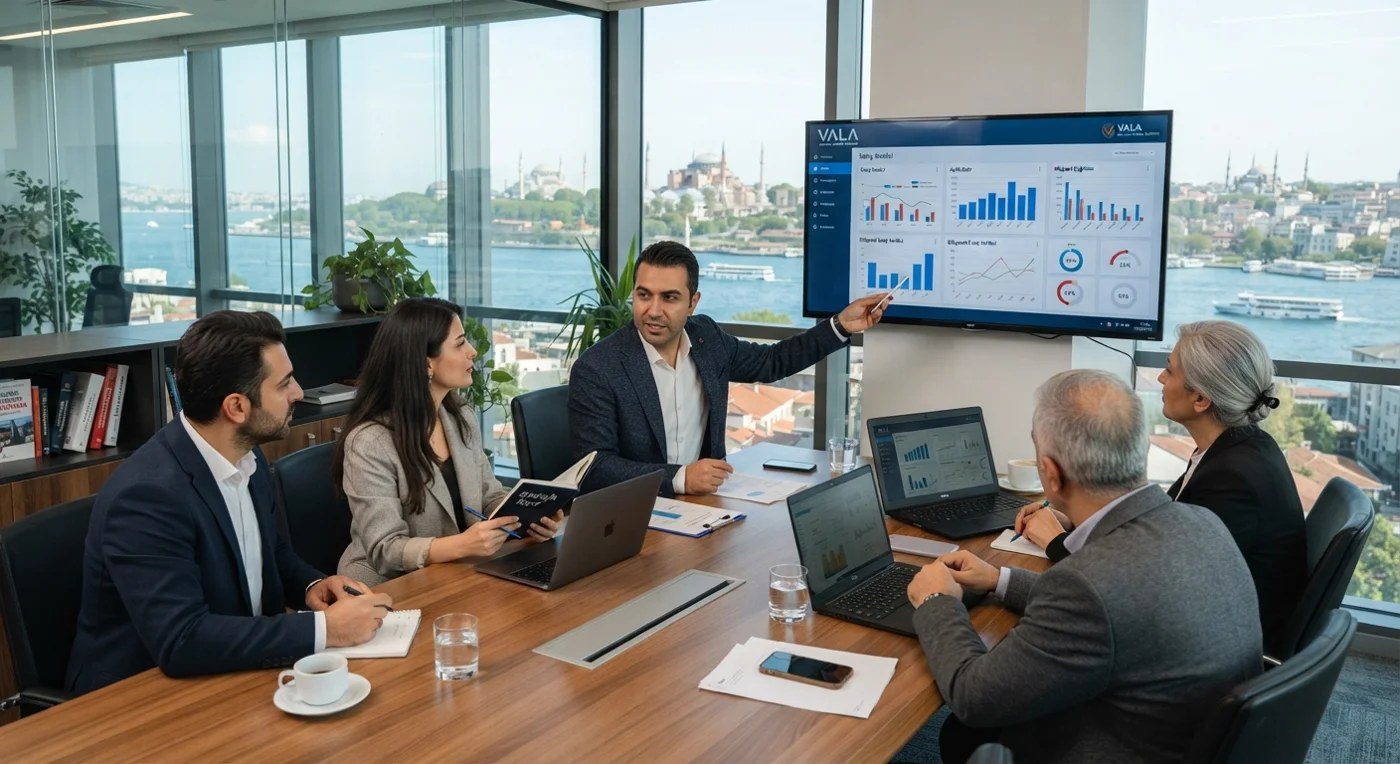
A small Istanbul shop and an import–export company both generate data every day: sales invoices, customer information, expenses, stock records, customs documents and digital advertising results. Without analysis, these remain stored files. Business data analytics turns scattered records into clear reports, trackable indicators and better-informed decisions.
At VALA Business, we use analytics to help reduce risk and support sustainable growth. We help investors and managers operating in Türkiye, particularly Persian-speaking businesses, consider market conditions, local requirements and competition together.
What is business data analytics?
Business data analytics involves collecting, cleaning, organising and examining company records to understand what happened, why it happened and what to do next. Findings are usually delivered through management reports, dashboards and key performance indicators (KPIs), giving decisions an evidence base.
Four main levels of analytics
- Descriptive analytics: What happened? For example, reviewing monthly sales trends or best-selling products.
- Diagnostic analytics: Why did it happen? For example, investigating falling sales in a region or channel.
- Predictive analytics: What might happen? For example, estimating seasonal demand or stock needs. Forecasts carry uncertainty.
- Prescriptive analytics: Which action is suitable? For example, comparing pricing choices or advertising budget allocations.
Why does it matter for business in Türkiye?
The digitalisation of financial and commercial processes in Türkiye is expanding the records available for analysis. Revenue Administration (GİB) systems such as e-Fatura, e-Arşiv and e-Defter are part of this shift. Digital records still need to be extracted correctly, made consistent and interpreted in context.
Türkiye’s digital transformation and AI policies emphasise secure, organised use of data. A published strategy or action plan does not mean that funding is immediately available to every company. A practical first step is to organise existing records, assess their quality and establish secure analytics processes.
Which business data can be analysed?
- Sales: volumes, product performance, seasonal patterns and results by branch or salesperson.
- Customers: purchasing behaviour, repeat purchases, customer lifetime value and churn.
- Finance: product margins, cost structures, cash flow and performance across periods.
- Supply chains and foreign trade: delivery times, freight costs, supplier performance and customs expenses.
- Digital marketing: website traffic, social media performance, conversion rates and campaign returns.
- Official market data: TÜİK and Ministry of Trade statistics for assessing market size, import and export trends and sector conditions.
Legal framework: analytics and Türkiye’s data protection law
Processing personal information about customers, employees or business partners in Türkiye is governed by Law No. 6698 on the Protection of Personal Data (KVKK). The Personal Data Protection Authority is the responsible regulator. Analytics projects involving personal information should account for these requirements from the outset.
Key obligations for businesses
- Transparency: provide the required information about the data controller, purposes, transfers, collection methods, legal grounds and individuals’ rights.
- Lawful processing: use an applicable legal basis under the law. Explicit consent is not mandatory for every processing activity; where needed, it must be obtained validly.
- Security: apply suitable technical and organisational measures against unauthorised access, unlawful processing and disclosure.
- VERBİS registration: assess the obligation using current criteria, exemptions and activity types. Not every company is automatically required to register.
- International transfers: sharing personal data with overseas servers or group companies is subject to Article 9. Adequacy decisions, appropriate safeguards or limited occasional-transfer routes may apply. If standard contractual clauses are used, notification to the Authority is required within five working days after signatures are completed.
These requirements also affect customer and partner trust. VALA Business takes KVKK requirements into account in analytics projects and coordinates necessary legal review with its commercial law services.
Public support for digital transformation
Businesses planning to improve their data infrastructure and management software can assess eligibility against current official programmes:
KOSGEB SME Digital Transformation Support Programme: supports financing costs on bank loans for eligible manufacturing SMEs investing in new machinery, equipment, software and hardware. An authorised digital maturity assessment and other application conditions apply. It is not an automatic grant for every software purchase.
Ministry of Industry and Technology digital transformation programmes: investments in big data, AI, cloud computing, the Internet of Things and automation are assessed under the applicable programme. Assessment, roadmap and authorised-provider requirements should be checked before applying.
Tools proposed in AI policies and action plans become application options only when an operational programme or call is available and the business meets its conditions.
Scope, deadlines, limits and eligible expenses may change. Review current official documents and calls before investing, and establish whether the programme fits the business.
VALA Business analytics services
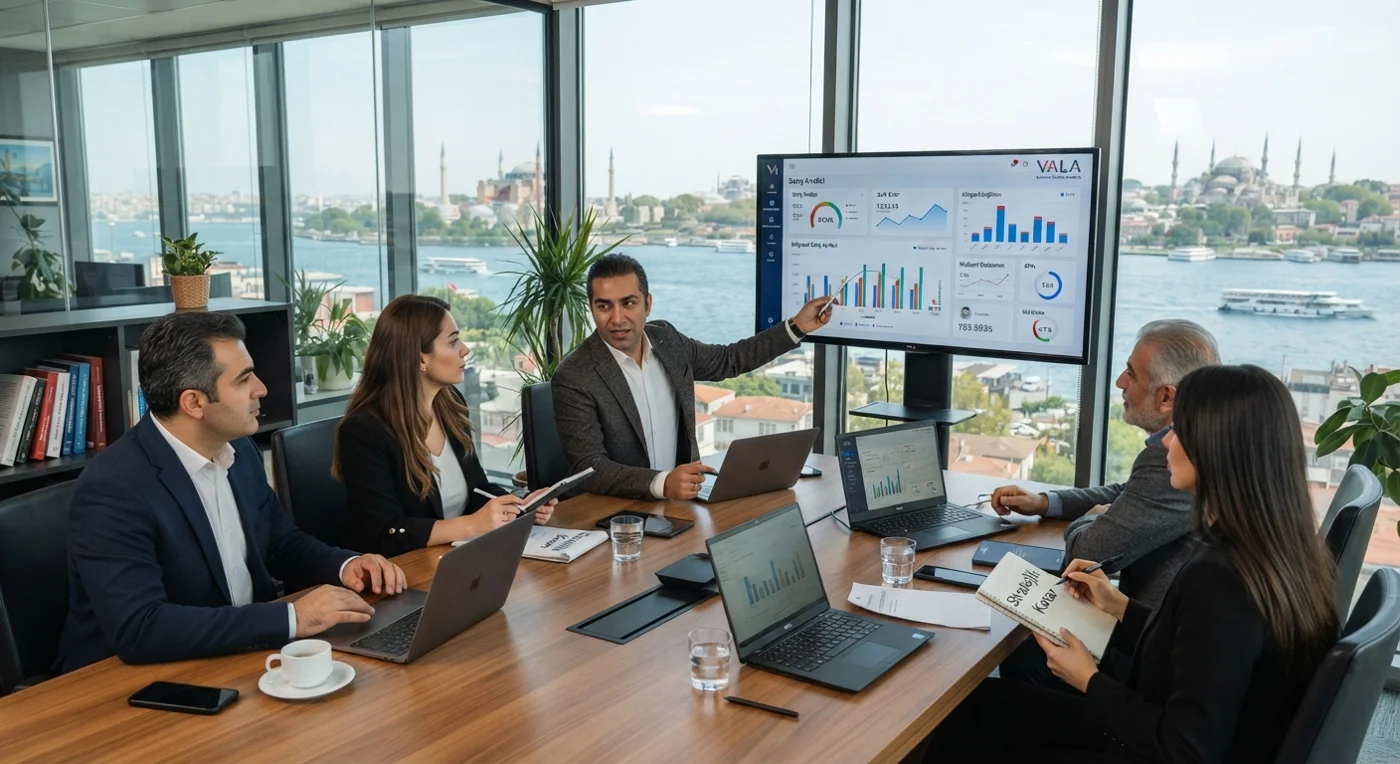
We combine knowledge of Türkiye’s market and the needs of Persian-speaking managers with a project scope suited to your business:
- Data assessment: identify sources, quality issues and gaps in record-keeping.
- KPI definition: select indicators that connect directly to business objectives.
- Management dashboards and business intelligence (BI): present sales, financial and marketing performance clearly.
- Sales, customer and profitability analysis: identify profitable products, customer groups and revenue opportunities.
- Target market analysis using official data: assess market entry and export expansion with reliable statistics.
- KVKK considerations: design collection and processing workflows around applicable legal requirements.
- AI readiness: organise data into a reliable structure for appropriate later applications.
- Management and staff training: build skills in reading reports and making evidence-based decisions.
How we work together
- Initial consultation: understand your business, objectives and main challenges.
- Data review and preparation: identify sources and prepare records while protecting confidentiality.
- Analysis and interpretation: extract findings that address business questions.
- Reports and dashboards: present results in clear language with practical recommendations.
- Follow-up and improvement: monitor indicators and update the analysis as conditions change.
Frequently asked questions
Is analytics only suitable for large companies?
No. SMEs can obtain useful insights from sales invoices, customer lists and expense records. The scope should fit the company’s size and actual needs.
What data do we need to start?
Sales and financial records, together with customer information that can be used lawfully, often provide a starting point. The first meeting establishes what is available and what should be recorded consistently in future.
Will our company data remain confidential?
Confidentiality is a core working principle. Access, sharing, retention and security arrangements are defined at the start of the project; personal data processing takes KVKK requirements into account.
What if we transfer data outside Türkiye?
Using overseas servers or sending reports containing personal information to group companies may trigger international-transfer rules. Establish the appropriate legal mechanism and notification or authorisation requirements before transferring. Standard clauses have a five-working-day notification deadline.
How are analytics and AI connected?
Well-organised, high-quality data underpins useful AI applications. Analytics helps identify suitable datasets and use cases; the reliability of the resulting outputs still needs assessment.
Support today’s decisions with evidence
In Türkiye’s competitive market, better decisions start with understanding your existing records. Discuss your business with VALA Business to develop an analytics plan suited to your needs.